How Often Should You Replace Your Brakes? Signs It’s Time for Service in Western New York
April 17, 2026
If you drive in Buffalo, Rochester, Syracuse, or anywhere across Western New York, your brakes work harder than most.
Road salt. Stop-and-go traffic on I-90. Quick stops in downtown Buffalo. Winter slush in suburban Rochester. These conditions wear down WNY brakes faster than national averages suggest. You want to know your brakes are ready before the first spring storms hit.
So how often should you replace your brakes, and how do you know when it’s time?
Here’s what local drivers need to understand.
How Long Do Brake Pads and Rotors Typically Last?
There isn’t a single mileage number that fits every vehicle.
That said, most brake pads last between:
- 30,000 to 70,000 miles
- City drivers’ trend toward the lower end
- Highway commuters often see longer life
Rotors typically last longer than pads but often need resurfacing or replacement between 50,000 and 70,000 miles, depending on wear.
In Western New York, harsh weather conditions often shorten those timelines.
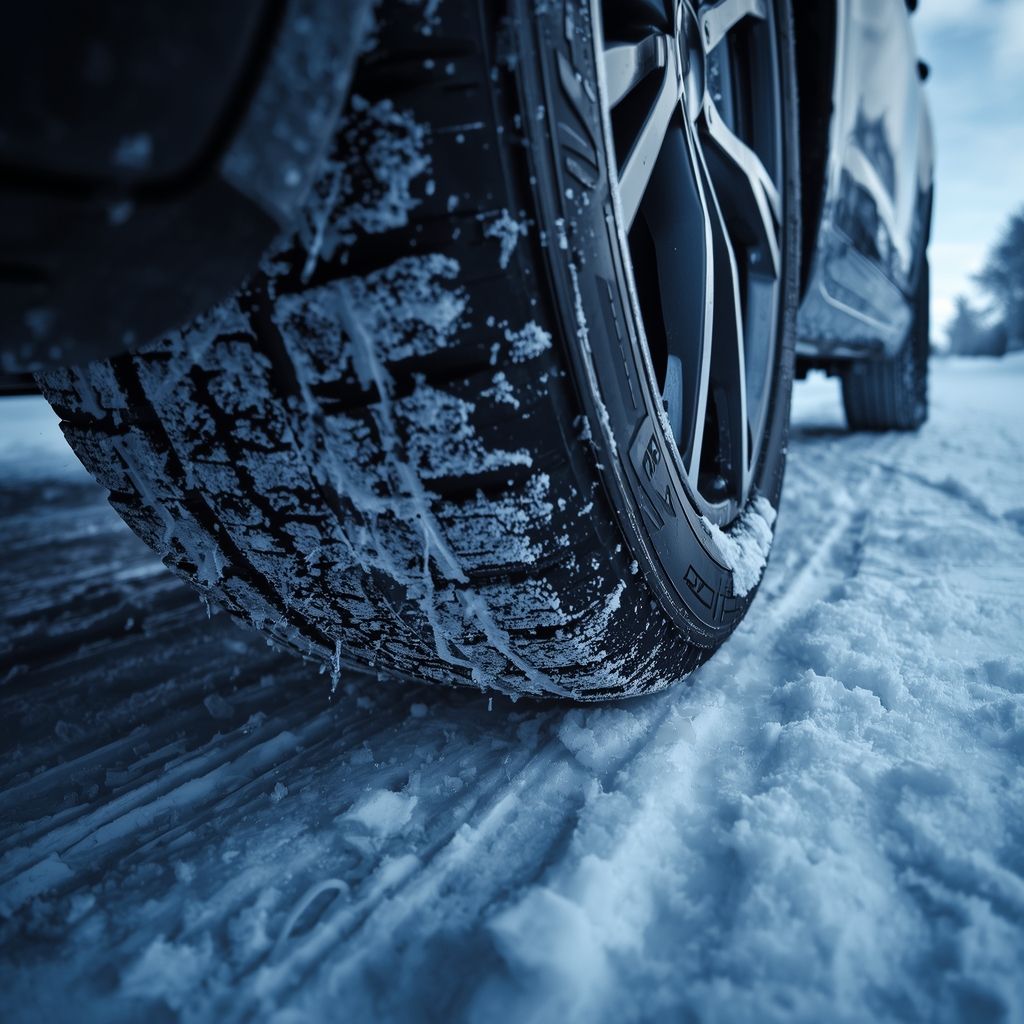
Salt exposure, moisture, and repeated hard stops on slick roads accelerate wear, especially on vehicles driven daily through Buffalo winters.
If you’re unsure where you fall in that range, scheduling a Buffalo brake repair inspection is the safest move.
Why Western New York Wears Brakes Faster
Driving conditions here are uniquely demanding.
After a Buffalo winter, we regularly see:
- Corroded brake hardware
- Rusted rotors
- Sticking calipers
- Pitted brake lines
- Uneven pad wear from salt buildup
City drivers in Syracuse or downtown Rochester often stop more frequently, which increases pad wear. Meanwhile, Thruway drivers traveling I-90 at highway speeds may brake harder from higher speeds, placing stress on rotors.
Even parking outside during snow season allows moisture and salt to sit on components overnight.
That’s why Rochester brake service intervals often differ from what national maintenance charts suggest.
The Most Common Warning Signs It’s Time for Brake Service
Brakes usually give you signals before they fail.
If you notice any of the following, it’s time to schedule an inspection:
- Squealing or squeaking sounds
- Grinding noise when stopping
- Steering wheel vibration during braking
- Vehicle pulling to one side
- Soft or spongy brake pedal
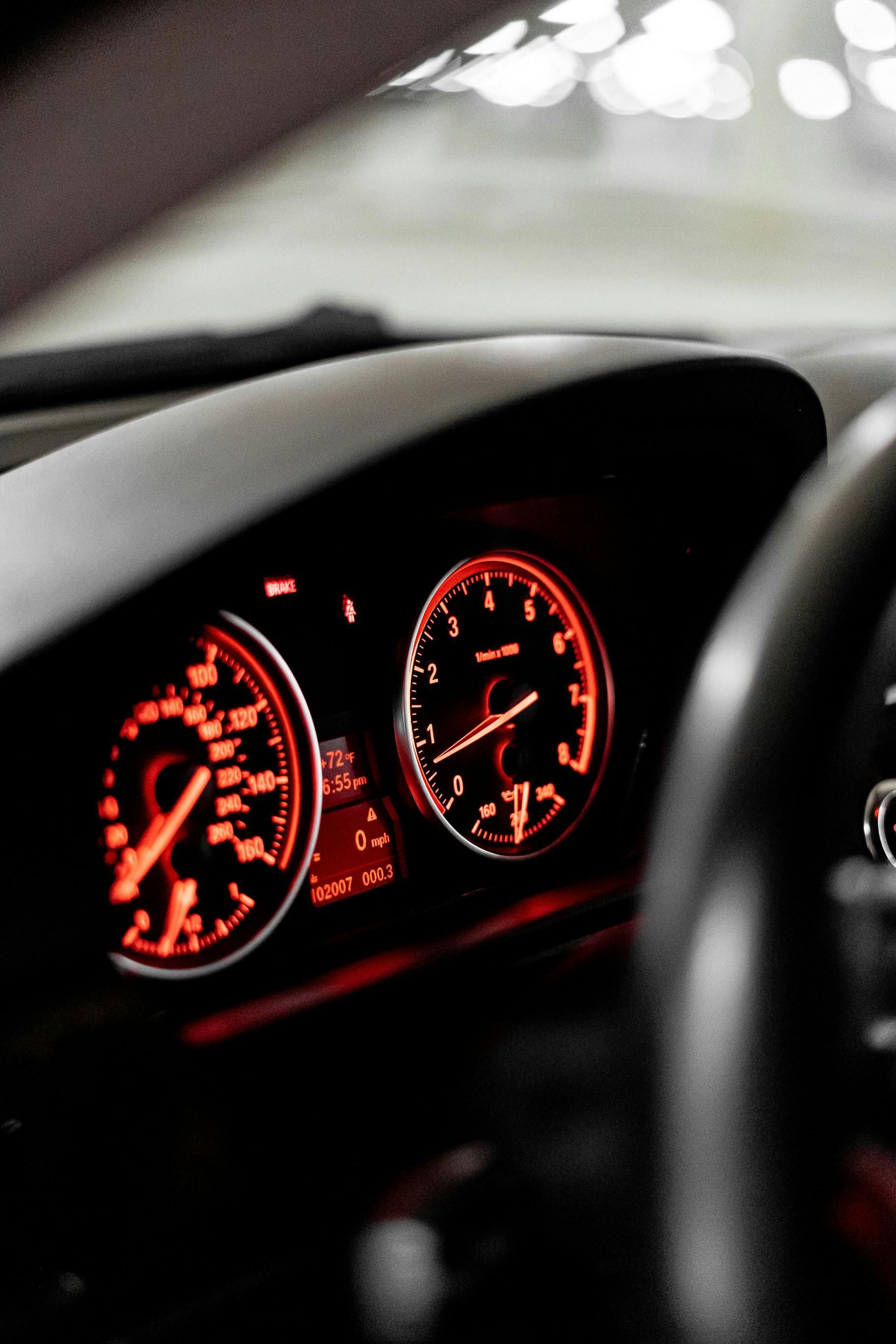
- Brake warning light on your dashboard
Some issues are urgent. Others allow short-term monitoring. A professional inspection determines the difference.
Is It Just Normal Squealing... Or Something Serious?
Many drivers tell themselves, “It’s just squealing.”
Sometimes that’s true. Brake pads include a small wear indicator designed to squeal when pads get thin.
But squealing can also signal:
- Glazed brake pads
- Corrosion buildup
- Sticking hardware
- Early-stage rotor damage
Grinding is more serious. That often means the pad material is gone and metal is contacting metal.
At that stage, damage escalates quickly, turning a basic pad replacement into a more expensive rotor repair.
If you’re hearing anything unusual on Route 20 or during your commute through Buffalo traffic, it’s worth having it checked.
Brake Pad Thickness: What’s Safe and What’s Too Thin?
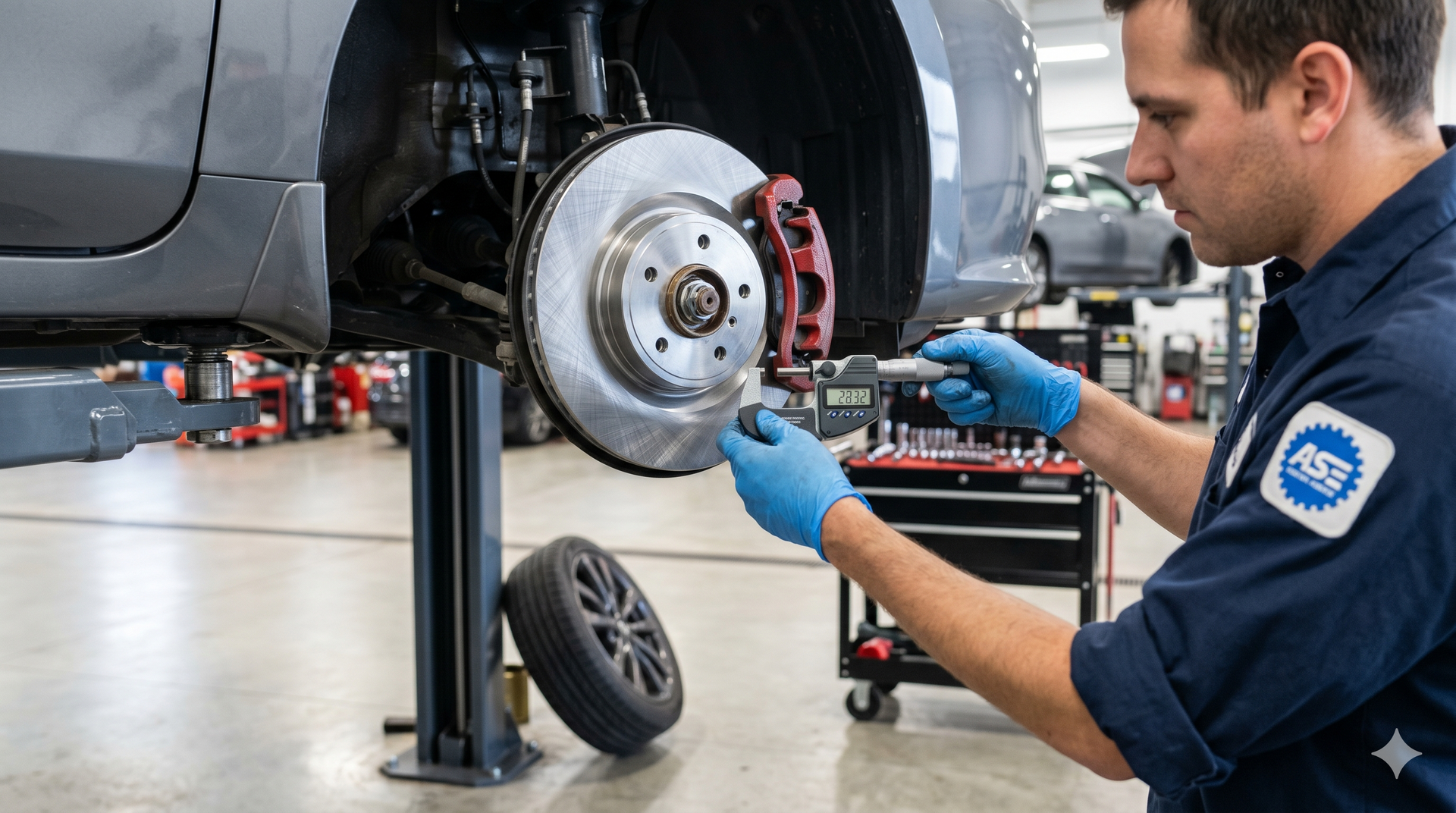
Brake pads are measured in millimeters.
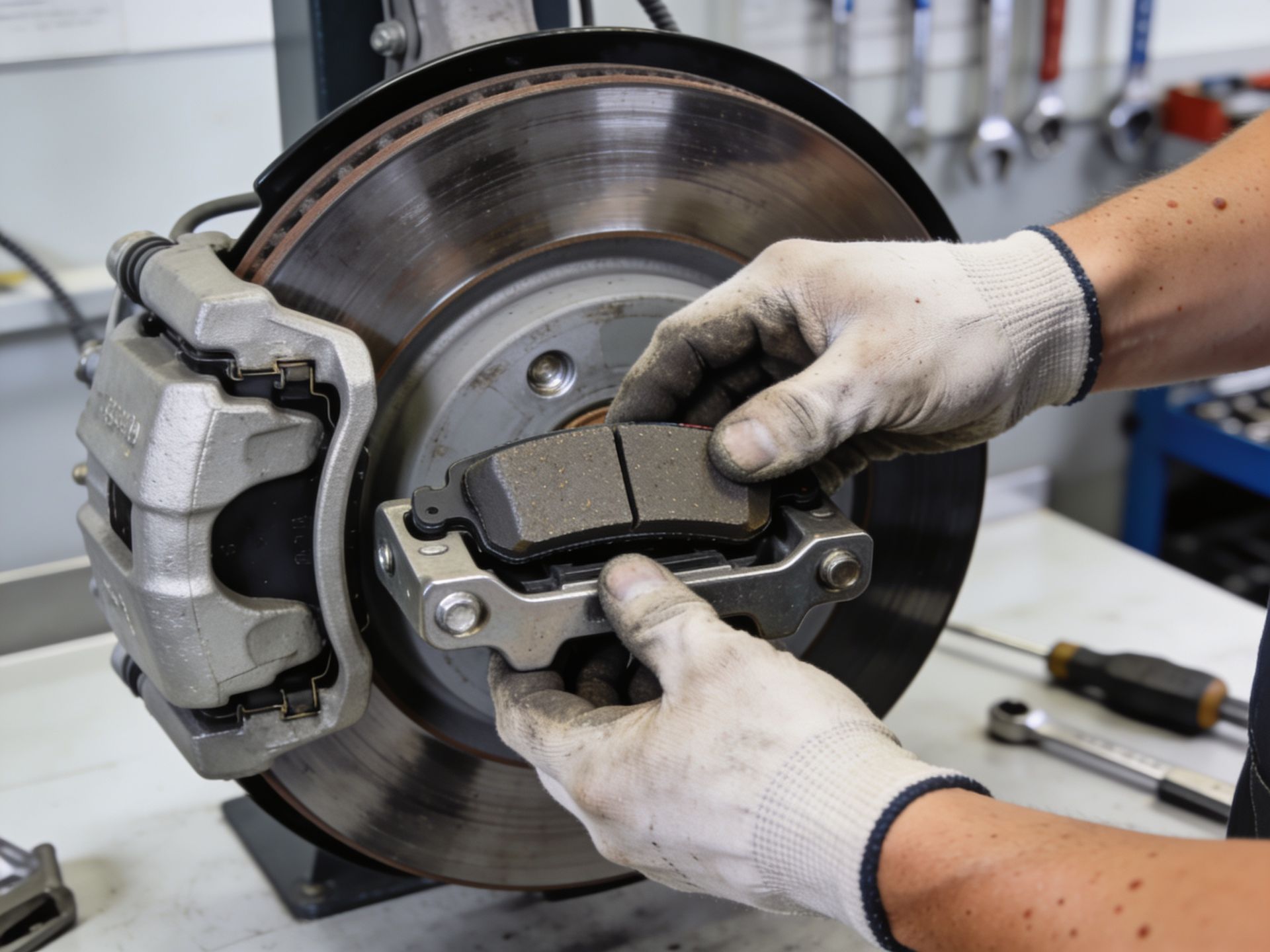
- New pads typically measure 10-12mm
- At 4mm, monitoring is recommended
- At 3mm or below, replacement is usually advised
A quick driveway tip: if you can see the outer brake pad through your wheel, compare it visually to a quarter’s thickness. While not perfectly precise, it gives a rough sense of wear.
Still, a professional measurement during a Rochester brake service appointment provides accurate data.
Guessing isn’t worth the risk.
Why Do Rotors Warp and What Does It Feel Like?
If your steering wheel shakes when braking at highway speeds, warped rotors are often the culprit.
Rotor warping can happen due to:
- Repeated hard braking
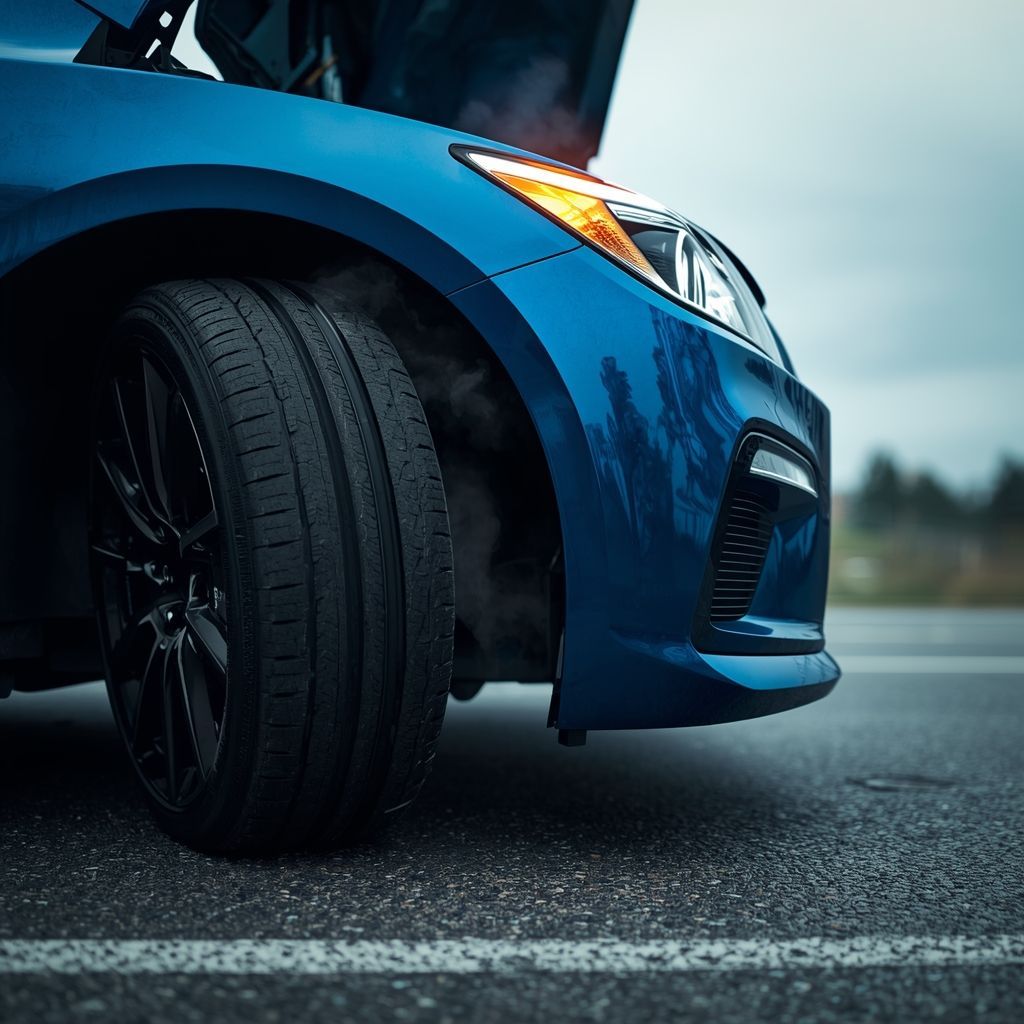
- Excessive heat buildup
- Uneven pad deposits
- Corrosion from salt exposure
On the New York State Thruway, braking from 65-70 mph repeatedly puts stress on rotors. Add moisture and rust, and vibration issues become common.
Warped rotors feel like a pulsing sensation in the brake pedal or steering wheel.
That’s not something to ignore.
Disc Brakes vs. Drum Brakes: What’s the Difference?
Most modern vehicles use disc brakes in the front and either disc or drum brakes in the rear.
Disc brakes:
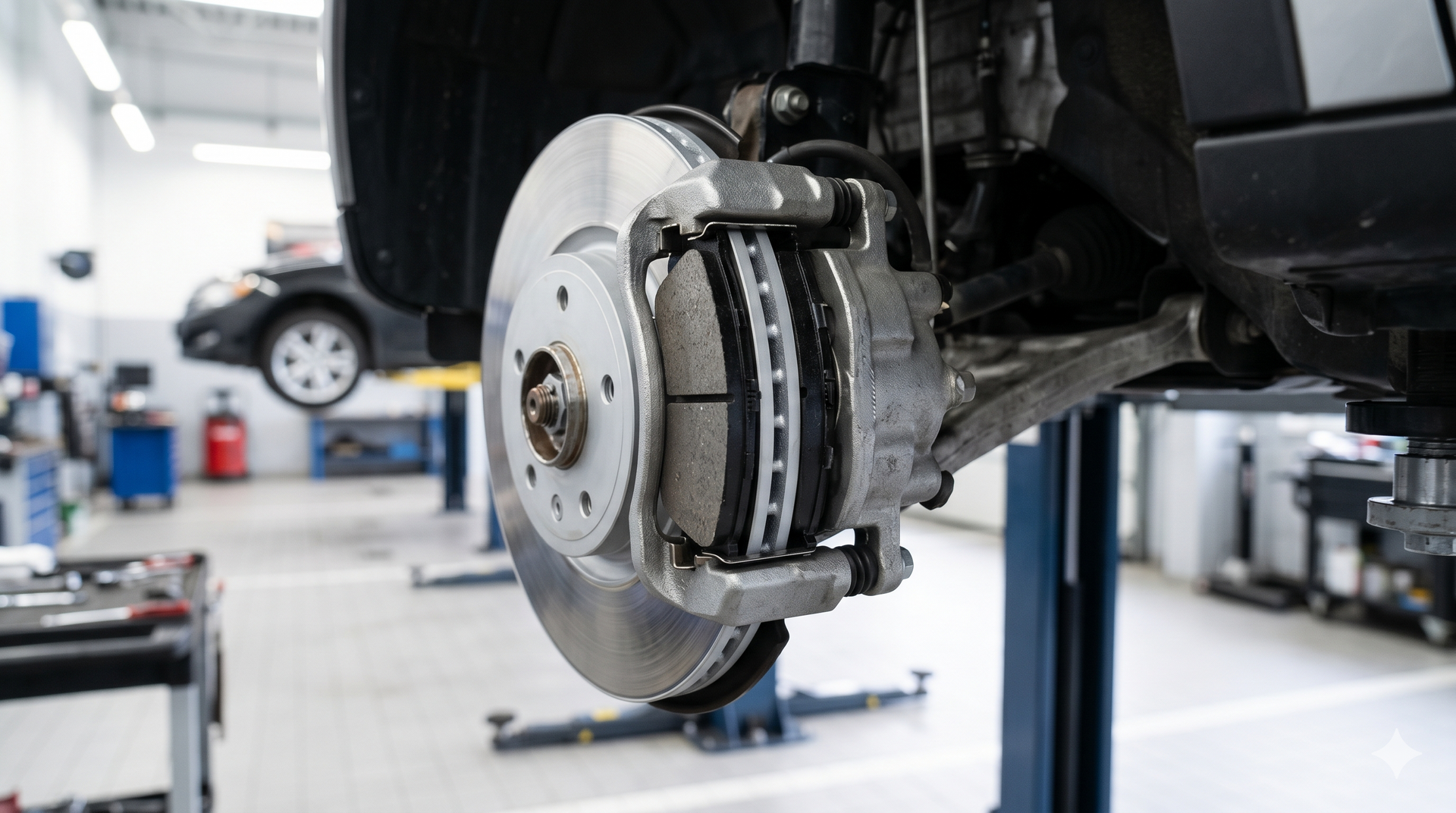
- Use calipers and rotors
- Offer stronger stopping performance
- More common on newer vehicles
Drum brakes:
- Use brake shoes inside a drum
- Often found on rear axles of some sedans and compact cars
- Typically last longer but can be affected by corrosion
Drum systems in Western New York can suffer from salt intrusion if not maintained properly.
A full brake inspection checks both systems thoroughly.
What Happens If You Delay Brake Service?
Waiting can cost more than acting early.
Replacing brake pads early may cost a few hundred dollars per axle. Waiting until pads grind into rotors can double that expense.
Delaying service may also lead to:
- Caliper damage
- Rotor replacement instead of resurfacing
- Reduced fuel efficiency
- Longer stopping distances
In severe cases, brake failure creates safety risks you don’t want to face during the upcoming spring storms.
Acting early almost always saves money.
Honest Cost Guidance for WNY Drivers
While exact pricing varies by vehicle, here’s a general breakdown:
- Brake pad replacement: typically a few hundred dollars per axle
- Pads and rotors together: higher, depending on vehicle size and parts
- Full brake service including hardware: varies based on condition
At Dunn Tire, we provide transparent pricing before work begins. You’ll see exactly what’s needed, and what isn’t.
No pressure. No guesswork.
What a Professional Brake Inspection Includes
If you’re unsure whether it’s time, the safest step is a brake inspection.
Our ASE-certified technicians evaluate:
- Pad thickness (measured precisely)
- Rotor thickness and condition
- Caliper operation
- Brake fluid condition
- Brake lines for corrosion
- Hardware integrity
- Drum brake components when applicable
We categorize findings clearly:
- Immediate attention
- Monitor
- Good condition
This gives you a roadmap, not a surprise bill.
City Drivers vs. Highway Drivers in Western NY
Where and how you drive matters.
City drivers in Buffalo or downtown Syracuse:
- Frequent stops
- Short trips
- Faster pad wear
Highway commuters on I-90:
- Fewer stops
- Harder braking from higher speeds
- More rotor stress
Both driving styles create wear, just in different ways.
Understanding your pattern helps determine service timing.
Seasonal Brake Tips for Western New York
Get Ready for Spring
Coming out of a hard winter, check for:
- Rust buildup on rotors
- Sticking calipers
- Uneven braking feel
- Brake warning lights
Spring inspections are common for Rochester brake service customers after snow season.
“It’s Not Grinding Yet” | Why Waiting Is Risky
Many drivers rationalize minor brake noise.
If it’s not grinding, it must be fine, right?
Not always.
By the time grinding begins, damage is already happening. Addressing squealing or vibration early prevents larger repairs later.
If something feels off, trust that instinct.
Chesterfield, VA: A Different Climate, Different Wear
At our Chesterfield, VA location, brake wear patterns differ.
Heat and humidity play a larger role than salt and freezing temperatures. Long spring and summer drives and warm pavement can accelerate heat-related rotor wear.
The principle remains the same: inspect early, service proactively.
Why Choose Dunn Tire for Brake Service in Western New York?
Drivers searching for Buffalo brake repair or Rochester brake service choose Dunn Tire because:
- Our technicians are ASE-certified
- We’ve handled decades of WNY brake conditions
- We understand belt corrosion
- We offer transparent pricing
- We operate Monday through Saturday
- We have convenient locations across Buffalo, Rochester, Syracuse, Auburn, Batavia, Niagara Falls, and Erie PA
We’ve seen every brake issue Western New York roads can create.
And we explain everything clearly.
Not Sure If It’s Time? Let Us Take a Look.
If you’ve noticed squealing, vibration, or a soft pedal, don’t wait.
If you’ve just come through a harsh Buffalo winter and getting ready for the spring season, get ahead of problems now.
If you’re unsure how much life your brakes have left, that’s exactly what an inspection is for.
Schedule your brake service or inspection at Dunn Tire today.
Our ASE-certified technicians will measure, evaluate, and explain everything. You’ll know exactly where you stand, and exactly what to do next.
Stay safe on the Thruway.
Stay confident in downtown traffic.
Stay ready for whatever Western New York roads bring next