How Old Are Your Tires, Really? Reading the DOT Date

October 30, 2026

You can check the age of your tires yourself in just a few minutes.

The tread looks fine, so why would we say it's time for new tires?

Because tires have a birthday, and it matters.

Tread depth is an important part of tire condition, but it isn't the whole story. Rubber ages over time, even when a vehicle isn't driven very often.


That's why a second car with low mileage can have deep tread and still be riding on tires that are past their safe service life.

The good news? You can check the age of your tires yourself in just a few minutes.


At Dunn Tire, our ASE-certified technicians look at the whole tire, including tread, age, and signs of dry rot. If your tires are fine, we'll say so. If age is becoming a concern, we'll explain why.


Here's how to find your tire's DOT date code and what that number can tell you.


Your Tires Have a Date Code


Every tire has identifying information molded into its sidewall.

Look for the letters DOT followed by a series of numbers and letters. The last four digits of the DOT code tell you when the tire was manufactured.

Those four numbers represent the week and year the tire was made.

For example, a tire with a date code of 2422 was manufactured during the 24th week of 2022.


A code of 4019 means the tire was manufactured during the 40th week of 2019.

Once you know where to look, checking your tire's age is pretty simple.


If you're trying to understand a tire age DOT code in Buffalo, start with those final four digits.


Can't Find the Four-Digit Code?


Check both sides of the tire.

The complete DOT code may only appear on one sidewall. Depending on how the tire is mounted, that can mean the date code is facing toward the inside of the vehicle.


Don't crawl underneath your vehicle or put yourself in an unsafe position trying to find it.

If you can't easily see the complete code, stop by Dunn Tire. We can check the date codes as part of a tire inspection.


Why Tire Age Matters Even When the Tread Looks Good


Drivers are used to thinking about tire replacement in terms of tread.

And tread absolutely matters.

But rubber changes as it ages.

A tire can lose flexibility and develop cracking over time, even if it hasn't traveled enough miles to wear down the tread.

That's why looking at tread alone can give you an incomplete picture of tire condition.

The tire may look like it has thousands of miles left based on tread depth while the rubber itself tells a different story.


The Low-Mileage Tire Trap

Imagine a second car that only gets driven a few thousand miles each year.

It spends most of its time in the garage. The tread still looks deep. From a quick glance, the tires may seem nearly new.


Then you check the DOT code.

They're 10 years old.

That's the low-mileage trap.


Tires age whether they're rolling down the highway every day or spending most of their time parked.

We see it every fall: a car with barely any miles and tires cracking with dry rot. Tread looked great, rubber was done.

That's why owners of second cars, seasonal vehicles, and seldom-driven vehicles should pay particular attention to tire age.


How Old Is Too Old?


There's no single number that tells the entire story because tire condition, use, and environment all matter.

But age gives you an important reference point.

As a general guideline, tires should be inspected closely once they reach around six years old.


By around 10 years, replacement is generally recommended regardless of how much tread remains.

That doesn't mean every six-year-old tire automatically needs replacement.

It means age becomes an increasingly important part of the inspection.


If you aren't sure how old your tires are, check the DOT code or ask Dunn Tire to check it for you.


What Does Tire Dry Rot Look Like?


Dry rot can be easier to spot once you know what you're looking for.

Look closely at the sidewall and the grooves between the tread blocks.


Possible signs include:

  • Fine cracks along the sidewall
  • Cracking between tread grooves
  • Rubber that looks dry or brittle
  • Multiple small cracks concentrated in one area
  • More significant cracking around the sidewall


A tiny mark doesn't automatically mean the tire is unsafe.

But visible cracking, especially on an older tire, deserves a closer look.


If you're concerned about dry rot on tires in WNY, bring them in for an inspection rather than trying to judge the severity from appearance alone.


Why Western New York Is Tough on Tire Rubber


Tires in Western New York deal with changing conditions throughout the year.

Summer heat gives way to cold fall mornings. Winter brings freezing temperatures, snow, slush, and road salt. Then temperatures climb again in spring and summer.


Those temperature swings can be hard on rubber over time.

Road salt and seasonal exposure add another factor.


None of this means WNY tires automatically age faster than every other tire. It means age and condition deserve attention alongside tread depth when you're deciding whether a set is ready for another season.


Fall is a particularly good time to check.

Before winter driving arrives, take a few minutes to look beyond the tread.


In Phoenix, Tire Age Can Matter Even More


Climate changes how tires age.


Western New York drivers deal with major temperature swings, cold weather, and road salt. Phoenix drivers face a very different challenge: sustained

desert heat and strong UV exposure.

High temperatures can accelerate the aging of tire rubber, particularly along the sidewalls.


That makes age-based inspections especially important in hot desert climates.

The environments may be different, but the takeaway is the same.

A tire's condition is about more than how much tread you can see.


A Tire Can Look Fine and Still Be Too Old

This is what makes tire age easy to overlook.

There may be no obvious flat. No bald tread. No immediate sign from the driver's seat that something is wrong.

The tire simply looks old only when you know where to look.

That's why the DOT code is such a useful tool.


It gives you information you can't get from tread depth alone.

If you're asking "how old are my tires?" in Rochester, those four digits can give you the answer in seconds.


Do a Quick Tire Age Check at Home


You don't need any special tools to do a basic age check.

Take a few minutes and look at all four tires.


1. Find the DOT code.
Look for the final four-digit date code on the sidewall.


2. Calculate the tire's age.
Use the week and year to determine roughly how long ago it was manufactured.


3. Look at the sidewalls.
Check for fine cracking, dry-looking rubber, or other visible changes.


4. Look between the tread grooves.
Dry rot can appear here too, not just on the outer sidewall.


5. Think about how the vehicle is used.
Is it a daily driver? A second car? Does it sit for long periods?


Age, appearance, and use all help tell the story.


When Can You Keep an Eye on the Tires?


Not every older tire needs to come off immediately.

You may be able to continue monitoring a set if:

  • The tires aren't excessively old.
  • There are no visible signs of dry rot.
  • The rubber remains in good condition.
  • Tread depth is still healthy.
  • An inspection doesn't uncover other concerns.


As tires get older, regular inspections become more important.


If you're approaching the six-year range, it's a good time to start paying closer attention to condition.


When Is It Time to Replace?


Age can become a reason to replace tires even when the tread still looks good.


Consider replacement if:

  • The tires show significant dry rot or cracking.
  • The rubber appears brittle or deteriorated.
  • The tires are approaching the end of their recommended service life.
  • They're around 10 years old, even with remaining tread.
  • An inspection finds age-related deterioration that makes continued use a concern.


This is where an honest tire inspection matters.

You shouldn't replace a tire simply because someone glanced at the sidewall and said it's old.

You should know the date, condition, and reason behind the recommendation.


We Look at the Whole Tire, Not Just the Tread


At Dunn Tire, tread depth is only part of the inspection.

Our ASE-certified technicians can read the DOT date code, check for dry rot and cracking, look at tread condition, and help you understand whether your tires are ready for more miles.

If the tires are fine, we'll tell you.

If age is the reason replacement makes sense, we'll explain what we're seeing and why it matters.

No pressure. Just a clear look at the actual condition of your tires.


Find Out How Old Your Tires Really Are


You don't have to guess based on how the tread looks.

Check the DOT date code.


If the tires are getting older, look for cracking and dry rot. Think about how much the vehicle is actually driven and how long those tires may have been sitting.

And if you're still unsure, let us take a look.


Dunn Tire has more than 24 locations across Buffalo, Rochester, Syracuse, Niagara Falls, and surrounding Western New York communities, with convenient Monday through Saturday hours.


Stop by for a free tire inspection, ask us to check your DOT date codes, or book a replacement consultation if you think your tires may be aging out.

We'll look at the whole tire and give you an honest answer about what's actually left.
November 10, 2026
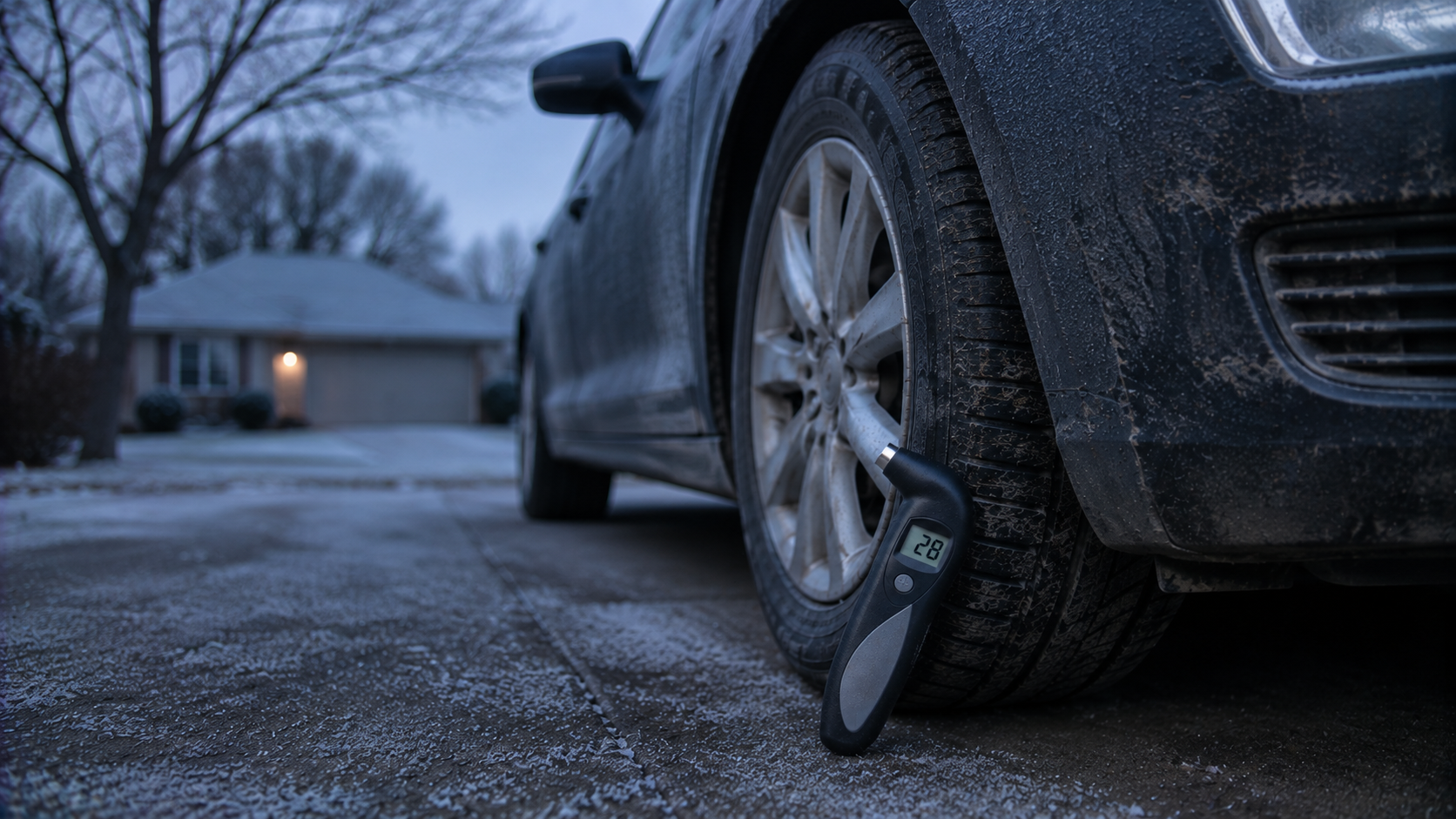
First cold morning of the year, and there it is. The tire pressure light. Yesterday, your dashboard was clear. Today, you're staring at a warning light before you've even left the driveway. Sound familiar? For drivers across Buffalo, Rochester, Syracuse, and Niagara Falls, it's a common sign that winter is on its way. As temperatures drop, so does the air pressure inside your tires. The good news is that a tire pressure warning doesn't always mean you have a flat or need new tires. Sometimes, your tires simply need a little air. But knowing the difference between a normal temperature-related pressure drop and a slow leak matters, especially when Western New York roads start getting slippery. Here's what your tire pressure light is telling you and what to do next. Why Does Tire Pressure Drop in Cold Weather? Your tires don't have to be leaking to lose pressure when temperatures fall. As the air inside your tires gets colder, its pressure decreases. That's why tires that were properly inflated during a warm October afternoon may read low on a freezing November morning. And it doesn't take a dramatic temperature change to make a difference. Here's the rule worth remembering: For every 10°F drop in temperature, tire pressure typically decreases by about 1 PSI. PSI stands for pounds per square inch, the unit used to measure tire pressure. So if the temperature drops 30 degrees, your tires could lose approximately 3 PSI without any air escaping. That's enough to trigger a tire pressure warning in some vehicles. For drivers dealing with tire pressure in winter in Buffalo, understanding this simple relationship can make that first cold-morning warning a lot less confusing. Why Your TPMS Light Comes on During the First Cold Snap Your Tire Pressure Monitoring System, or TPMS, is designed to alert you when tire pressure falls below a certain threshold. When the weather is mild, your tires may have enough pressure to stay above that threshold. Then the first cold snap arrives. The air inside your tires cools, pressure drops, and suddenly the warning light appears. That's why so many drivers notice their TPMS light for the first time in November. Every first cold snap, our lot fills with pressure lights. Many are simply caused by the temperature change, and we can correct the pressure for free in just a few minutes. If you're seeing a TPMS light in Rochester, Buffalo, or elsewhere in WNY, don't assume something major is wrong. But don't ignore it either. What Does the TPMS Light Actually Mean? Your TPMS light is a warning that tire pressure needs attention. It doesn't necessarily tell you why the pressure is low. The cause could be a normal temperature-related drop, a slow leak, or another tire issue. And here's something important to understand: TPMS is a lagging indicator. By the time the low-pressure warning activates, at least one tire has already dropped below the system's warning threshold. That means the light isn't telling you pressure might become a problem later. It's telling you to check it now. Some vehicles display individual tire pressures, while others only show a warning symbol. Either way, the next step is to check the actual pressure. Why Low Tire Pressure Matters More in Winter A few PSI might not sound like much. But driving on underinflated tires can affect how your vehicle handles, stops, and wears through its tread. And those concerns become more important when you're driving through snow, slush, and freezing conditions. Low tire pressure can contribute to: Reduced handling performance: Underinflated tires may respond less predictably during steering and cornering. Longer stopping distances: Improper inflation can affect braking performance, particularly when traction is already limited. Uneven tire wear: Low pressure can cause the outer shoulders of the tread to wear faster. Lower fuel economy: Underinflated tires create additional rolling resistance, which can make your vehicle use more fuel. Excess heat buildup: Driving on significantly underinflated tires can generate excess heat and increase the risk of tire damage. On Western New York roads, proper tire pressure is one part of keeping your tires working as intended. It won't eliminate the challenges of ice or lake-effect snow, but it helps your tires maintain the performance they're designed to deliver. Don't Use the Maximum PSI on the Tire Sidewall This is one of the most common tire pressure mistakes. You look at the side of your tire, see a PSI number, and assume that's how much air it needs. But the number printed on the tire sidewall is generally the maximum inflation pressure, not the recommended pressure for your vehicle. Those are two different things. Your vehicle manufacturer determines the recommended tire pressure based on the vehicle's weight, handling characteristics, and other factors. You'll usually find that number on a sticker inside the driver's door jamb. You can also check your owner's manual. Always use the vehicle manufacturer's recommended cold tire pressure, not the maximum pressure listed on the tire. Overinflating your tires can create its own problems, including uneven wear and changes in handling. If you're unsure what pressure your tires need, Dunn Tire can check and set it for you. Why You Should Check Tire Pressure When Tires Are Cold For the most accurate reading, check your tire pressure when the tires are cold. That generally means before driving or after the vehicle has been parked for at least three hours. As you drive, your tires warm up and pressure increases. If you measure them immediately after a long drive, you may get a higher reading than you would when they're cold. That's why the pressure listed on your vehicle's door-jamb sticker is a cold tire pressure recommendation. In a WNY winter, checking pressure before your morning commute is often a convenient way to get an accurate reading. And if you've already been driving, don't release air just because the warm tire reading is higher than the cold specification. Let the tires cool before making that adjustment. Cold Weather or a Slow Leak? Here's How to Tell A tire pressure warning after a cold night may be caused by the temperature. But sometimes, the timing is just a coincidence. A slow leak can also cause pressure to drop, and cold weather may make the warning more noticeable. So how can you tell the difference? Signs It May Be a Normal Cold-Weather Drop The warning appears during the first major temperature drop. Several tires show similarly lower pressure. The tires look normal and aren't visibly damaged. Pressure remains stable after being adjusted to the correct level. Signs It May Be a Slow Leak One tire is noticeably lower than the others. The warning returns soon after you add air. You need to refill the same tire repeatedly. You notice a nail, puncture, or other visible damage. Pressure continues dropping even when temperatures remain relatively steady. If your warning light keeps returning, don't keep topping off the tire without finding out why. A tire inspection can help determine whether there's a puncture, valve issue, or another cause. What Should You Do When the TPMS Light Comes On? You don't need to panic, but you should take the warning seriously. Here's a simple plan. 1. Find a safe place to stop. If the vehicle feels unstable or a tire looks severely underinflated, don't continue driving normally. 2. Look at all four tires. Check for obvious damage, a visibly flat tire, or anything unusual. 3. Check the pressure. Use a reliable tire pressure gauge to measure each tire. 4. Compare it with the door-jamb recommendation. Don't use the maximum PSI printed on the tire sidewall. 5. Add air if needed. Bring the tires to the manufacturer's recommended cold pressure. 6. Monitor the warning. Some TPMS lights turn off after the pressure is corrected and you've driven a short distance. Others may require a reset according to the vehicle's instructions. If the warning returns, have the tire checked for a leak. And if you'd rather skip the guesswork, stop by Dunn Tire for a free tire pressure check. How Often Should You Check Tire Pressure in Winter? Don't wait for the warning light. Checking tire pressure at least once a month is a good habit, especially during winter. It's also smart to check before a long drive or after a major temperature change. Western New York temperatures can swing significantly over a short period. A tire that's properly inflated one week may need attention after several freezing mornings. Regular checks can help you catch pressure changes before they become large enough to trigger your TPMS. Think of it as a quick part of your winter vehicle routine. What If the TPMS Light Stays on After Adding Air? If you've adjusted your tire pressure and the warning light remains on, there are a few possible explanations. Some vehicles need to be driven for a short distance before the system updates. Others require a specific reset or recalibration procedure. A warning that continues to appear may also indicate a tire that's still losing pressure. And if the TPMS light flashes before staying illuminated, that can indicate a problem with the monitoring system itself. The important thing is not to assume the warning can be ignored simply because you've added air. If you're unsure what's causing it, have the tires and monitoring system checked. A Free Tire Pressure Check Can Be a Quick Fix Sometimes, the solution really is as simple as adding a few PSI. At Dunn Tire, we make it easy to find out. Stop by, and our team can check your tire pressures and adjust them to the correct specifications. If the pressure drop appears to be caused by the cold, we'll let you know. If one tire is losing air faster than the others, we can recommend a closer inspection. Our ASE-certified technicians understand the tire problems that show up when Western New York temperatures fall. And if your tires are in good shape, we'll tell you. No unnecessary upsells. Just a straightforward answer and the right amount of air. Keep Your Tires Ready for Western New York Winter Cold weather can lower your tire pressure, but you don't have to wait for a dashboard warning to do something about it. Remember the simple rule: approximately 1 PSI for every 10°F temperature drop. Check your pressure when your tires are cold, use the recommended PSI on your vehicle's door-jamb sticker, and pay attention if one tire keeps losing air. Dunn Tire has more than 24 locations across Buffalo, Rochester, Syracuse, Niagara Falls, and surrounding Western New York communities, with Monday through Saturday hours. If your TPMS light is on, stop by for a free tire pressure check. No appointment needed for a quick top-off. We'll help you determine whether it's just the cold or a tire that needs a closer look, so you can get back on the road with one less winter worry.
October 19, 2026
Wear patterns are worth paying attention to.
October 18, 2026
That's worth paying attention to.
September 9, 2026
How you drive those miles matters.
August 31, 2026
Your vehicle's air conditioning system works hardest when outside temperatures climb.
DunnTire Summer AC Check
August 11, 2026
Knowing what to watch for can help you address an issue before your vehicle overheats.
DunnTireAutoBrakeInspections
May 4, 2026
Before the first spring storms hit Western New York, you want to know your brakes are ready.
April 17, 2026
If you drive in Buffalo, Rochester, Syracuse, or anywhere across Western New York, your brakes work harder than most.
March 9, 2026
Your warning light just came on. Your heart’s racing. What now?
January 23, 2026
The first time your car slides on an early winter morning, your stomach drops.